Anvil
May 10–June 8, 2025
Solo exhibition by Gregory Kalliche
Press:
Contemporary Art Daily
Dear Dave
IMPULSE
The New York Times
__
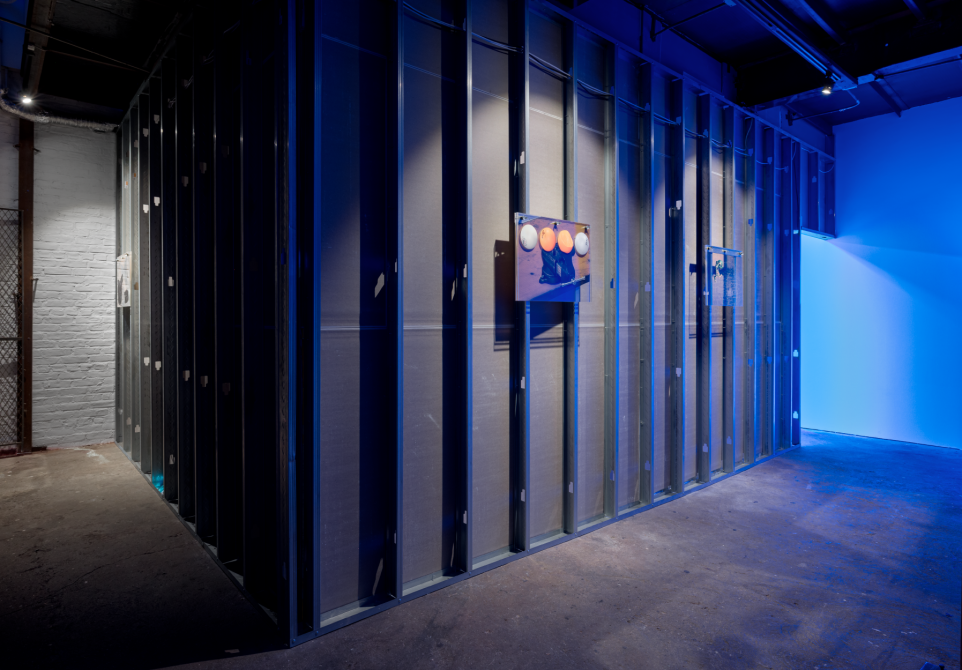
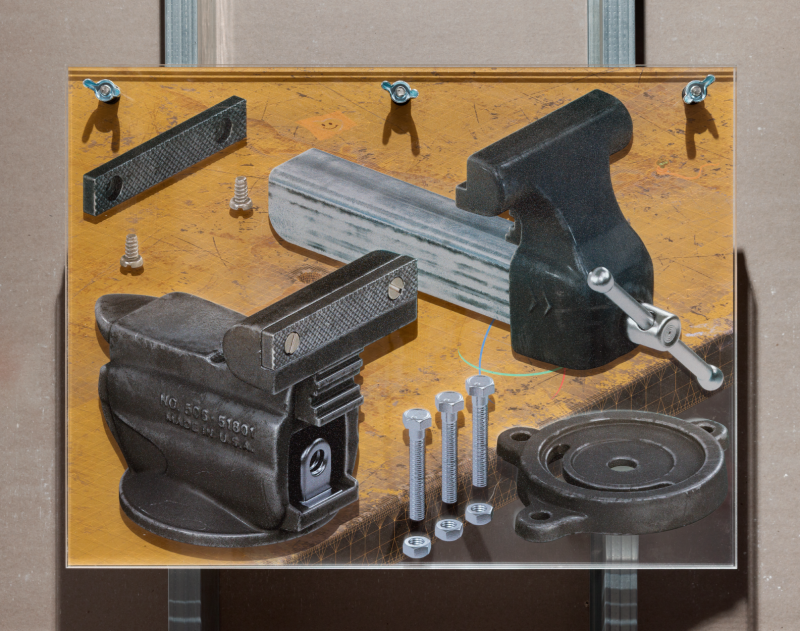
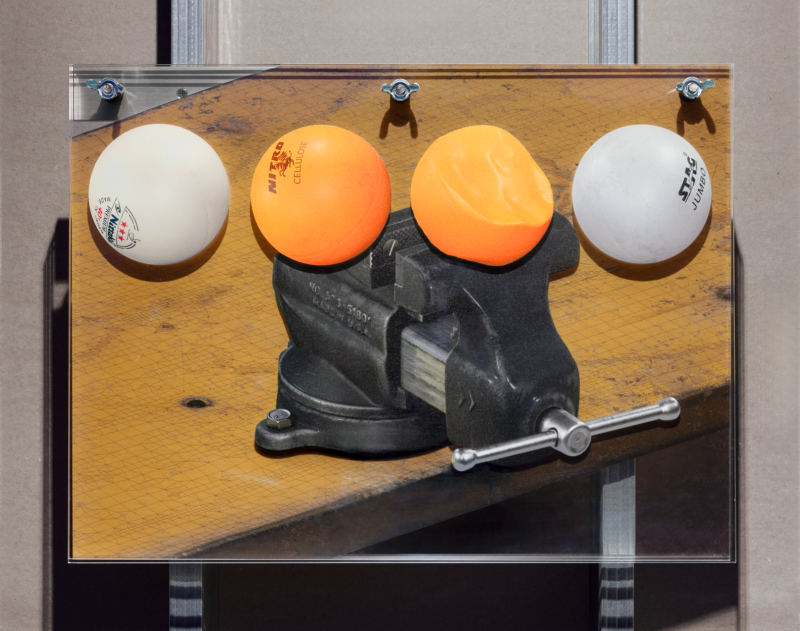
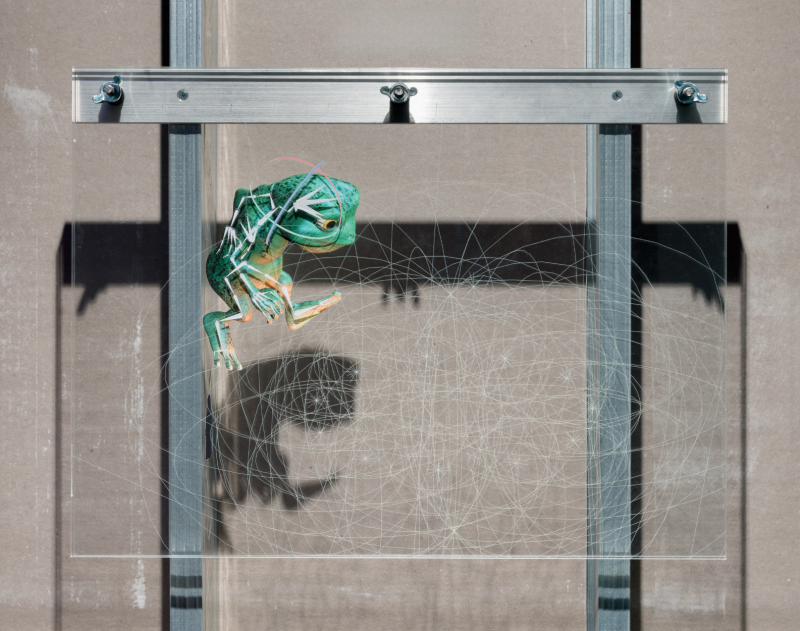
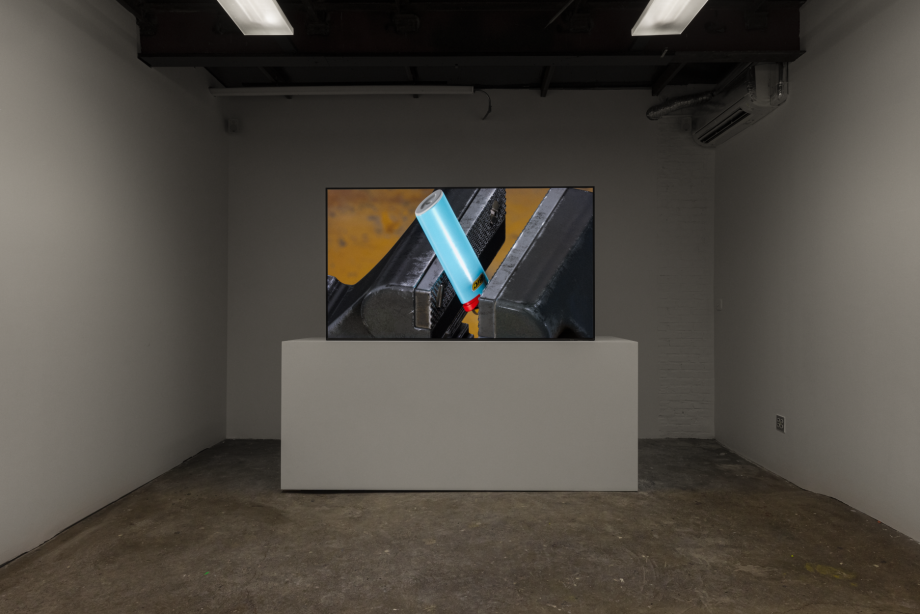
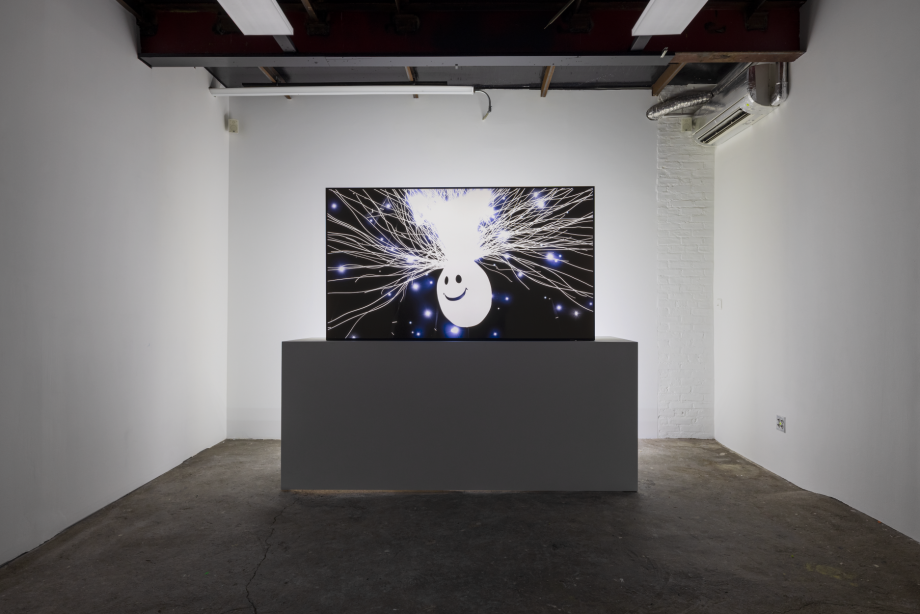
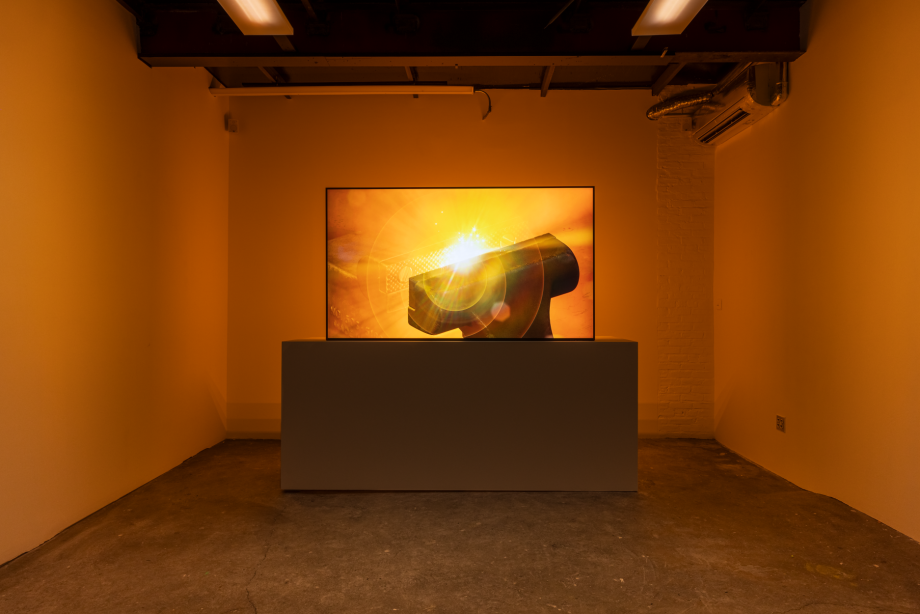
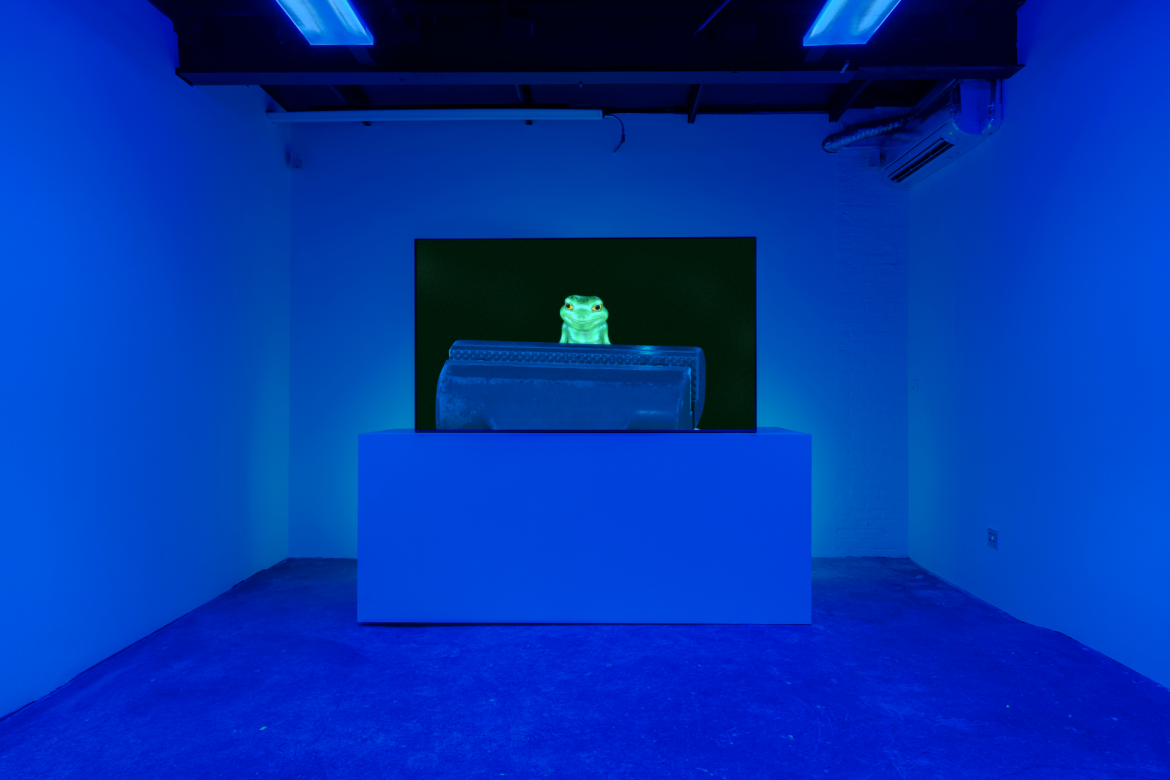
Anvil explores the friction between simulated digital material and the principles of physics which govern them. Taking a table vise as its starting point, the video animates the tension between a realistic physics simulation, where conventional rules of gravity and material properties apply, and its unwieldy, digitally-native counterpart—an environment of manipulated polygon meshes and skins. As objects—a lighter, stress relief balls, a frog, ping pong balls, and a sun, among others—interact with the vise, they operationalize the logic of computer-generated imagery: to abandon indexical reality in order to replace, extend, and build on it via uncanny simulations that appear convincing despite their impossible properties.
Like the vise itself, Anvil operates with its own internal rhythm. As digital objects interact with the vise, they trigger changes in the installation’s physical lighting, extending the onscreen choreography into the plane of reality. The figurative space between the vise’s jaws becomes a charged pressure point—a zone of interaction where environment and subject converge, containing and releasing energy in a continuous cycle that invites viewers to consider the various pressures that shape contemporary experience.
The title, Anvil, references the protoplasmic elasticity of cartoon physics—where the unplumbed violations of the cartoon gag makes “to bend and not break” one of its laws. In cartoon iconography, anvils epitomize the quintessential weighty and unwieldy object, deployed for comic effect on unsuspecting adversaries. The immortal and free-form quality of cartoons is charged with a significant energy; they are neither empty signifiers nor straightforward representations. To be destroyed and remain intact—this is the fundamental credo of the phantasmatic, cartoon universe. As Anvil’s objects resist or surrender to compression in unexpected, exaggerated ways, they tropify the central gag of cartoons: the instability of the rules which govern their animated space.
In the case of these hollow and gravity-defying animated objects, we only notice their weightlessness or heft against the backdrop of the photoreal worlds in which they are supposedly situated. Immersed in these simulations and exhilarated—or troubled—by their possibilities, Anvil asks: what does it mean, within visual culture, to take in a barrage of profoundly improbable relations to the world? These modeling systems recreate and reprogram the world in their own image, generating immanent possibilities of production by rendering the natural world as data. They erode the distance between optical space and screen space. At stake here is how different technical capacities have the potential to determine the transformation of our image via the image of our transformation.